Kidney Health Check

Find out what’s involved with a Kidney Health Check, as well as how often you should get one, and how accurate they are.

Taking control of your kidney health

The best way to know whether you have any stage of kidney disease is to get a Kidney Health Check. Going for checks regularly is key to early detection. When you know about kidney disease early, you can take steps to slow the progression to end-stage kidney disease. This can also make a huge difference to living your life to the fullest with kidney disease.

How to check your kidneys

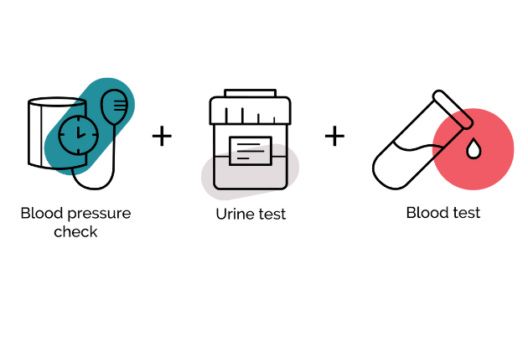
A Kidney Health Check is quick and simple. You can have a check at your local health centre, often as part of a regular check-up. A Kidney Health Check involves three tests:

  1. a blood test – to see how well your kidneys are filtering your blood
  2. a urine test – to check for albumin (a type of protein) or blood in your urine (wee)
  3. a blood pressure test – because high blood pressure and kidney disease are related.

Understanding Kidney Health Checks

It depends on if you have risk factors, or conditions that increase your chance for developing kidney disease.

Get a Kidney Health Check yearly if you:

  • have diabetes
  • have high blood pressure
  • are First Nations Australian over 18 years old

If you have any other risk factors (for example, you’re a smoker or have a history of kidney disease in your family), you should also get a Kidney Health Check but repeat the check every two years.

If you do not have any risk factors for kidney disease, there’s no need for you to undertake a Kidney Health Check – unless your doctor wants to conduct a test for other reasons.

Are you at risk? Take this two-minute Kidney Risk Test to find out.

A Kidney Health Check is an accurate way to monitor your kidney health. In saying that, there can be several steps.

If your test results show positive signs of kidney disease, your doctor will repeat the test to make sure. Your doctor may also organise an ultrasound to see the size of your kidneys. Your doctor will look for causes of kidney damage like kidney stones, tumours, or other problems with the structure of your kidneys and urinary tract. In some instances, you may be referred to a kidney specialist, called a nephrologist, for further review.

Your doctor will diagnose chronic kidney disease when your estimated glomerular filtration rate (eGFR) is low or you have signs of kidney damage for three months or more. In this case, you will need to see your doctor for regular check-ups. You can find out more in the factsheets listed below.

Book an appointment for a Kidney Health Check by calling your doctor today.

Suggested resources

Do you need a Kidney Health Check factsheet
Download PDF
How to ask for a Kidney Health Check
Download PDF
What is CKD?
What is CKD?
Download PDF
Estimated Glomerular Filtration Rate (eGFR)
Download PDF
Kidney Disease Tests and Procedures
Download PDF
Blood in Urine (Haematuria)
Download PDF
Common Kidney Disease Symptoms and Management Options
Download PDF
Make the Link: Chronic Kidney Disease, Diabetes and Cardiovascular Disease
Download PDF
Albuminuria Factsheet
Download PDF