How Your Kidneys Work
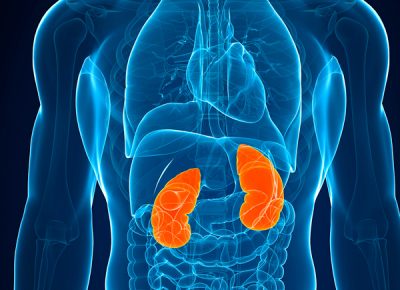
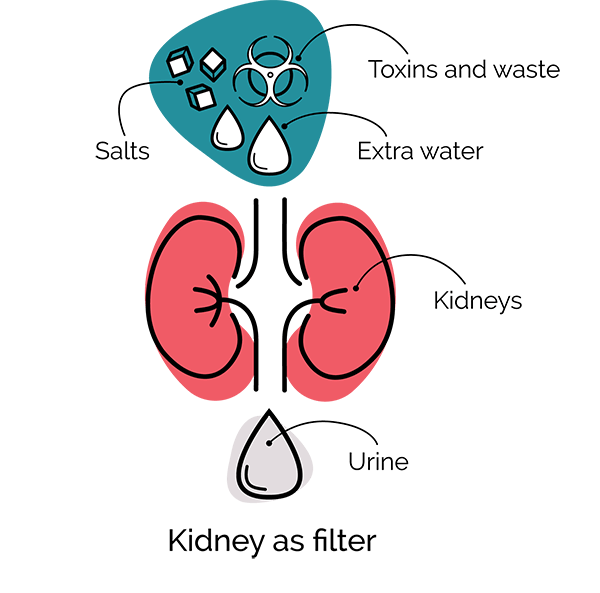
Your kidneys play a vital role in your body. They work hard to clean your blood and create urine (wee) for you 24 hours a day. Without working kidneys, you would struggle to process toxins and get rid of waste, and this would have a devastating impact on your health.
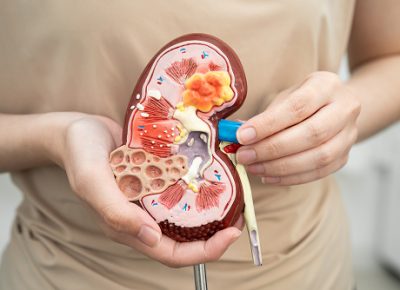
Healthy kidneys contain about one million tiny units, called nephrons, which filter the blood. The nephrons remove extra fluid and wastes, which are collected in the bladder before leaving the body as urine (wee). Kidneys work to:
- Clean your blood – Kidneys filter and circulate a fresh supply around your body 12 times every hour. This works out to a total of around 200 litres of cleaned blood per day.
- Create urine (wee) – Kidneys get rid of excess fluid, unwanted chemicals, and waste in your blood. These are flushed in the one to two litres of urine that you pass each day
It’s important to keep your kidneys healthy so they can perform these important tasks throughout your life. If your kidneys are not healthy, other organs in your body may suffer and this could lead to further health issues. Check out how your kidneys are connected to your heart and diabetes.

 Controlling blood pressure – Kidneys keep your blood pressure regular by releasing renin, a hormone that affects the size of your blood vessels and blood pressure. Kidneys also flush out extra fluid and salts that can raise your
  Keeping your bones strong and healthy – Kidneys assist with activating Vitamin D, which is crucial for building strong bones and helping with calcium absorption.
 Balancing salt and other minerals – Salt plays a role in keeping you hydrated and your blood pressure stable. Kidneys also balance calcium and phosphate, minerals needed by your bones, nerves, and cells.
 Keeping a healthy number of red blood cells –