Link between kidneys, diabetes & heart

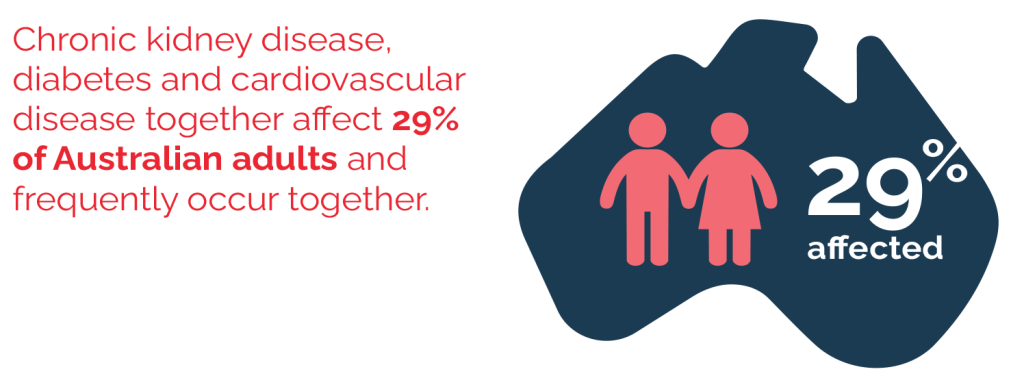
Chronic kidney disease, diabetes, and cardiovascular disease are linked, sharing common causes and risk factors. These chronic diseases influence each other and often can occur together. They also have similar treatment strategies.

1 out of 3 people that who end up in the hospital have diabetes, cardiovascular disease and/or kidney disease. Let’s learn more about how these conditions are linked.

Meet the links

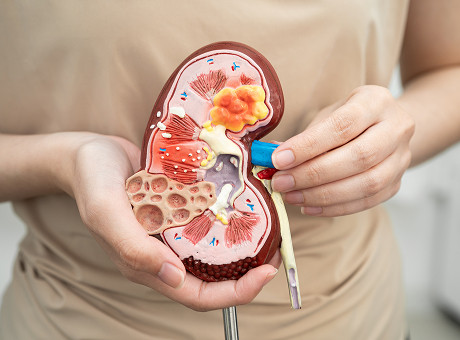
Chronic kidney disease (CKD) is a condition where your kidneys no longer filter the blood as well as they should. This leads to waste build up in your body. eGFR is marker of how well your kidneys are working and albuminuria (protein in the urine) is a sign of kidney damage.

Diabetes is a disease where the levels of blood sugar are too high. Normally, when you eat, your body makes a hormone called insulin that helps the sugar move from your blood into your body’s cells where it is used as energy. If you have diabetes, the pancreas does not make enough insulin, or the insulin that is made is not used properly by your body. This leads to the levels of sugar in your blood staying high.

Cardiovascular disease is also called heart disease, because it includes all the conditions of the heart and blood vessels. This includes heart failure, heart attack, and strokes. High blood pressure is major risk factor for developing cardiovascular disease.

In fact, diabetes and high blood pressure cause over half of kidney failure cases in Australia.


How are CKD and diabetes connected?

The high sugars from diabetes can damage the small blood vessels of the eyes, feet, and kidneys. In the kidneys, high sugars levels damage the nephrons, which are the filters of the kidneys, making it harder for your kidney to filter wastes from your blood.

Diabetes also increases the amount of sugar in your urine (wee). This can increase the risk for bacteria (germs) to grow and cause kidney infections that may lead to further damage.

50% of all people with diabetes will develop diabetic kidney disease, a type of chronic kidney disease. Risks for developing kidney disease from diabetes include:

  • how long you’ve had diabetes
  • your family history
  • your age, >60 years old (or if First Nations Australian >30 years old)


How are CKD and cardiovascular disease connected?

Risk factors for developing cardiovascular disease include reduced eGFR and protein in your urine (albuminuria). These are also indicators of CKD. In CKD, your kidneys may have trouble filtering potassium, an important mineral for your heart rhythm.

Kidney disease also affects your sodium (salt) levels. Higher levels of sodium cause high blood pressure, which means a high pressure of the blood in the arteries (a type of blood vessel) as its pumped around the body. High blood pressure damages the blood vessels to the kidney and the heart. This increases the risk for both kidney disease and cardiovascular disease.
 

Am I at risk?

The risk factors for CKD, diabetes, and cardiovascular disease are similar. You could be at risk for all three if you have:
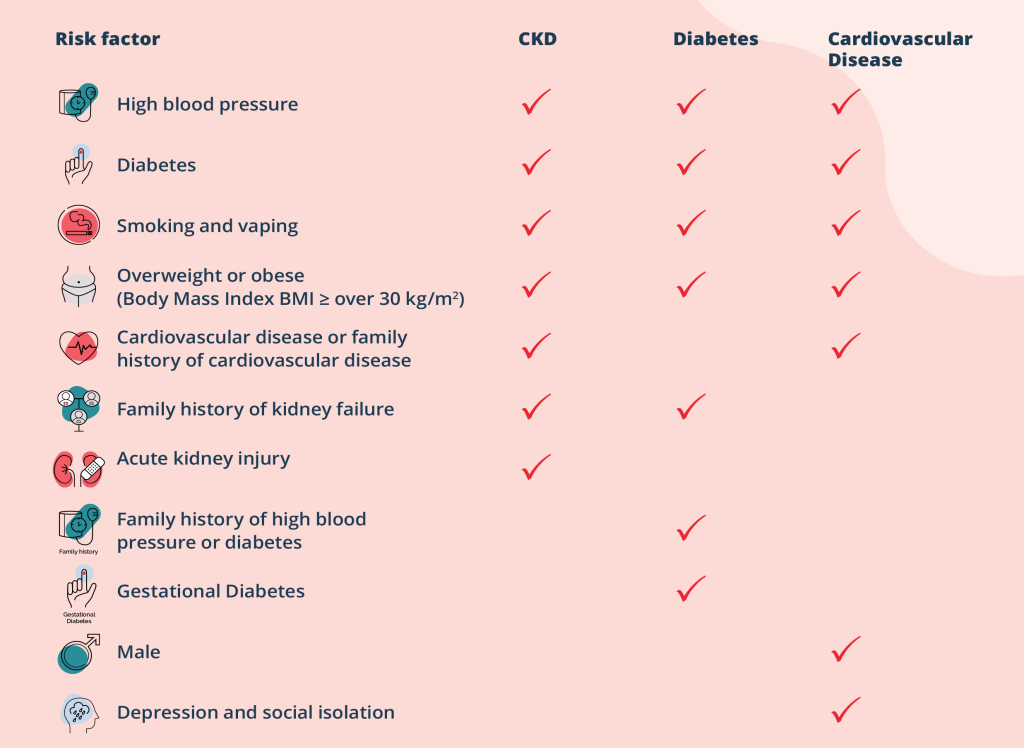
 

To learn more about the risk factors for kidney disease, diabetes, and cardiovascular disease, download our Make the Link factsheet.

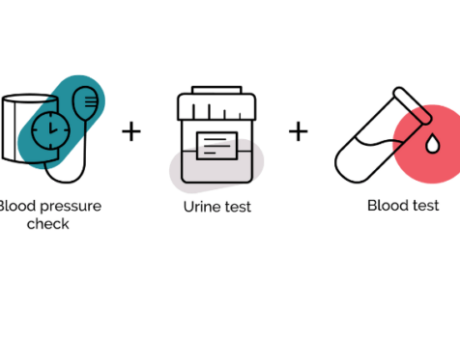
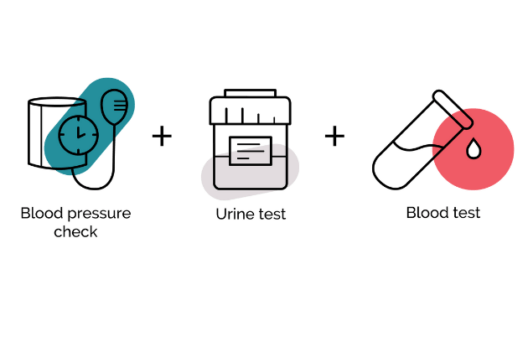
There’s a simple way to check if you have kidney disease when you’re at risk. Kidney function can be measured by three simple tests called a ‘Kidney Health Check.’ If you have diabetes or high blood pressure, you need a Kidney Health Check every year.
How can I reduce my risk?

The good news is that the same lifestyle choices that help your kidneys can prevent diabetes and cardiovascular disease. Be sure to:

  • eat a healthy diet full of vegetables, fruits, lean proteins, and wholegrains
  • drink water over sugary drinks when you are thirsty
  • reduce salt intake to <5 grams per day
  • avoid highly processed foods and added sugars
  • keep active, aiming for 30 minutes of exercise on most days.
The medicines used to treat high blood pressure or diabetes can also help with your kidney health. Talk to your doctor or pharmacist to understand which medicines you take, what they are for, and how they work.


ACE inhibitors or ARBs

These are both types of blood pressure medicines that work on angiotensin II, a hormone that causes your blood pressure to rise. The names of common ACE inhibitors end in -PRIL and angiotensin receptor blockers (ARBS) end in -SARTAN. These medicines help to relax your blood vessels, reducing blood pressure and the strain on your heart and kidneys.

Your doctor may recommend either an ACE inhibitor or ARB to help slow the progression of kidney disease, reduce your blood pressure, and/or reduce your risk for cardiovascular disease.


Cholesterol tablets

Commonly used cholesterol medicines are ezetimibe or medicines ending in -STATIN. They work by lowering cholesterol, a fatty substance that can build up in your blood vessels. High cholesterol increases your risk for heart disease, especially when you have stage 1-4 chronic kidney disease. These medicines help to reduce the risk of heart attack or stroke.


SGLT2 inhibitors

Empagliflozin or dapagliflozin are the names of SGLT2 inhibitors that help lower blood sugar in people with type 2 diabetes by making them urinate (wee) out more sugar. They help the body get rid of excess sugar, benefiting both the kidneys and treating diabetes.

Even in people without diabetes, these medicines have shown to help slow down the decline in kidney function for those with CKD. They help protect kidneys in people with kidney disease by reducing the pressure in the kidney filters.


Non-steroidal MRA

Finerenone is a non-steroidal MRA medicine used only in people with both diabetes and CKD. This medicine is used to lower the risk of worsening kidney function and can reduce the risk of cardiovascular disease.


GLP-1 RA

Semaglutide and dulaglutide may be added to other medicines to treat both diabetes and kidney disease. They have potential benefits for your heart and kidneys. Unlike the above medicines that are given by mouth, these medicines are injected into your skin one time per week.

In Australia, these medicines are only used in CKD if you also have diabetes. If you already have kidney failure, your doctor will not start these medicines.

Factsheets

Make the Link – CKD, Diabetes, Heart factsheet
Download PDF
What is chronic kidney disease factsheet
Download PDF
Blood pressure and CKD factsheet
Download PDF
Diabetic kidney disease factsheet
Download PDF
Managing Kidney Disease Symptoms factsheet
Download PDF
Salt and your kidneys factsheet
Download PDF
Sugar and your kidneys factsheet
Download PDF

Special Thanks! This educational website update is supported by a sponsorship provided by Boehringer Ingelheim.

Last updated: November 2025