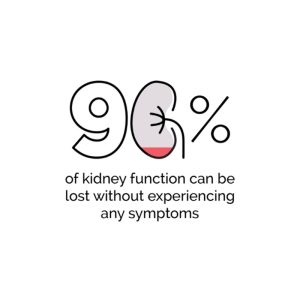
Chronic kidney disease is often called a ‘silent disease’ as you can lose up to 90% of your kidney function before feeling sick. That’s why it’s important to get a Kidney Health Check if you have diabetes, high blood pressure or other risk factors. You can request a Kidney Health Check from your GP or local clinic to test:
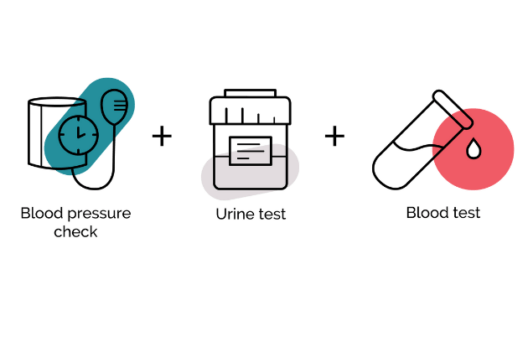
If your doctor is unsure of the cause of your kidney disease, they may order a:
- kidney biopsy – where a sample of kidney tissue is removed by a small needle for examination under a microscope
- computerised tomography (CT) scan or a magnetic resonance imaging (MRI) – which take a detailed picture of your organs
- cystoscopy – a thin, flexible telescope called a cystoscope is used to view the inside of your bladder or kidneys.
Symptoms of kidney disease
Most people do not notice symptoms of kidney disease until later stages, when most of the kidney’s function is lost and wastes start to build up. If symptoms do occur, you may notice:
- fatigue or low energy
- swelling of your legs, feet, or hands
- problems sleeping
- nausea or vomiting
- restless legs
- stomach issues
- itchy skin.
Long term effects of chronic kidney disease
Your kidneys are involved in many important functions of your body including filtering wastes, controlling blood pressure, activating vitamin D and balancing your minerals. Long-term effects of kidney disease include:
- anaemia – failing kidneys do not produce enough erythropoietin, a hormone responsible for making red blood cells
- heart disease – kidney disease is linked to high blood pressure due to imbalances of minerals like salt and potassium
- weak bones – vitamin D activation, calcium and phosphate levels, all important minerals in bone health, become imbalanced when your kidneys are damaged.
What should you do if you’re diagnosed with kidney disease?
A diagnosis of kidney disease can be overwhelming at first. There are steps you can take to slow down your kidney disease and live a fulfilling life. First steps to manage your kidney disease include:
- visit your doctor regularly to monitor your kidney health
- obtain any tests or procedures ordered by your doctor
- take your medicines as prescribed, as some medicines help slow damage to the kidneys
- keep your other conditions under control, such as diabetes or high blood pressure.
- Be sure to keep your vaccinations up to date, including a yearly influenza vaccination. Find out more about which vaccinations you need by visiting https://www.health.gov.au/topics/immunisation/vaccines.
The most important thing you can do to keep your kidneys healthy is to keep your whole body well. Try these helpful tips for maintaining healthy kidneys:
 stop smoking
 keep active
 lower the amount of salt and sugar in your diet
 limit how much alcohol you drink.