
Anaemia is a medical condition that occurs when there are not enough red blood cells in your body.
Anaemia can happen if your body:
- does not make enough red blood cells
- loses too many red blood cells
- destroys the old red blood cells faster than new cells can be made.
Red blood cells are the most common type of cells in your blood. Their main function is to carry oxygen from the lungs to the other parts of the body, such as your muscles, bones and other organs. The oxygen delivered by the red blood cells gives you energy and makes sure your body is working as it should.
When you have anaemia, it is common to feel tired due to the lack of energy delivered to your body.
All about anaemia
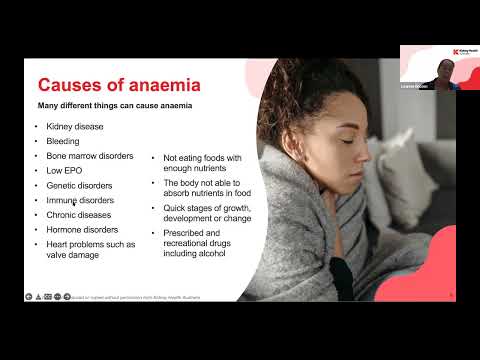
Anaemia can have many causes, including:
- blood loss or bleeding – from trauma, surgery, stomach bleed, heavy periods, or frequent blood donations
- kidney disease
- not enough nutrients – due to a lack of iron, vitamin B12 or folic acid in the diet or when the body cannot absorb or properly use nutrients
- bone marrow disorders
- genetic disorders – such as sickle cell disease or thalassaemia
- immune disorders
- chronic disease – such as rheumatoid arthritis, lupus or cancers
- infections
- certain drugs and medications; including alcohol, antibiotics, certain pain medicines (NSAIDs) or blood thinners
- hormone issues – such as low thyroid levels (hypothyroidism)
- mechanical damage –mechanical heart valves can damage red blood cells
- times of rapid growth or high energy needs – such as puberty or pregnancy
Anaemia in chronic kidney disease (CKD) usually starts to develop when the eGFR, a measure of kidney function, is less than 60 mL/min/1.73m2. Anaemia becomes more common as eGFR decreases. A staggering 1 in 2 people with kidney disease will develop anaemia.
The main causes of anaemia in CKD are:
- reduced production of the hormone erythropoietin (EPO) by the kidneys
- reduced absorption of iron.
Healthy kidneys make an important hormone called erythropoietin (EPO).
EPO sends a signal to your body make more red blood cells. Your body is constantly making new red blood cells, to replace the old ones as red blood cells only live for a certain amount of time.
When you have kidney disease, your kidneys’ ability to make EPO is affected.
Without EPO, your body does not get the message to make new red blood cells, which can lead to anaemia.
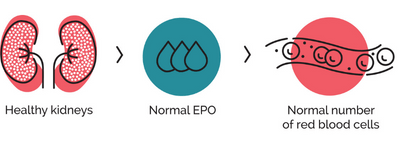
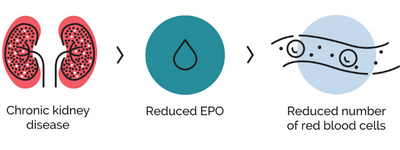
The other reason anaemia can develop in CKD is due to your body not getting enough iron. This could be due to not getting enough iron in your diet, or your body’s ability to use the iron that you are getting. Iron is found in foods such as red meat and leafy green vegetables. Your body needs iron to make red blood cells, so not having enough iron can also cause anaemia.
Anaemia can happen in the early stages of kidney disease and grow worse as kidneys fail and EPO production is lost.
Anaemia is especially common if you:


It is important to note that anaemia can be present with or without symptoms, and many symptoms are caused by other problems.
The only way to be sure if you have anaemia is to be tested. If you are experiencing symptoms, you should talk to your doctor.
In anaemia it is common to experience:


- Shortness of breath (Your blood may not have enough red blood cells to deliver oxygen to your organs.
Your body increases your breathing rate to bring more oxygen into your body). - Cold intolerance (Your body is less able to handle feeling cold).
- Fatigue or weakness (You feel tired even when you get enough rest and notice you lose energy faster).
- Pale skin (Pale skin is caused by reduced blood flow or a lower number of red blood cells).
- Dizziness / loss of concentration (Feeling dizzy or having difficulty concentrating may be a sign that your brain is not getting enough oxygen).
- Chest pain (Anaemia in CKD can increase your risk of heart problems because the heart must work harder to provide blood to your body.
If you experience an unusually fast heart rate or are worried, please speak to your doctor).
Symptoms of anaemia can impact your quality of life and can increase your risk for other problems, including death. Speak to your doctor if you notice these symptoms, as treatments are available to help reduce the impact of anaemia on your body.
If you have CKD, it is important to know if you have anaemia. People with CKD who have untreated anaemia have a greater risk of hospitalisation and even death. This risk increases with the severity of your anaemia.
People with CKD & severe anaemia also have an increased risk of heart problems as the heart needs to work harder than normal to get enough oxygen to the body.
Keeping your haemoglobin (Hb) level in a specific range is an important goal for reducing your risk.
Haemoglobin is the part of the red blood cell that carries the oxygen to the body and a blood test for Hb will tell your doctor if you have anaemia.
In anaemia, your haemoglobin level will be reduced.

Blood tests are used to measure your level of haemoglobin (Hb). The test may also measure the size of cells and number of red blood cells. This is often called a complete blood count. Blood test may also include: iron, folate and vitamin B12 levels.
Your medical history will include: your symptoms, current and past medical conditions, prescription and OTC meds, family history.
A physical exam will include: blood pressure check, heart rate check and a review of your skin for changes in colour or unusual bruises.
Sometimes the cause is the kidney disease, but for some, further testing may be required to rule out other causes.
If have any symptoms of anaemia, talk to your GP about getting tested.
Use our ‘conversation aid’ in our CKD & Anaemia factsheet to assist your talk with your GP.
Treating anaemia can help relieve some of the symptoms, particularly fatigue.
Depending on the cause of your anaemia, your doctor may recommend one of the following treatments:
- Erythropoiesis-stimulating agents (ESAs) – Medicines that send a signal to your body to make more red blood cells.
ESAs essentially replacing the EPO hormone that is made in a healthy kidney. - Iron supplements or infusions – Iron helps your body make the haemoglobin on red blood cells. Without enough iron, your red blood cells won’t be able to carry the oxygen to the rest of the body. Iron can be found in foods like meat, fish, tofu, beans, spinach, cereal, and other foods.
To boost the levels of iron in your body, you may be prescribed Iron as supplements (usually tablets or drinks) or as an iron infusion delivered through your veins. - If you are on dialysis, extra iron may be given during your dialysis treatment.
- Red blood cell transfusion – Is a procedure to increase the number of red blood cells in your body by giving you red blood cells from someone else’s body through an intravenous drip (IV).
Blood transfusions are only considered in severe anaemia that does not respond to other treatments.
As it takes your body about 4 weeks to produce new red blood cells, it may take some time between starting treatment and your symptoms easing.
As each person and the causes of their anaemia are different, it is important you speak to your doctor about the right treatment for you.
There is lots of research currently happening on anaemia in CKD with new treatment options expected in the not-too-distant future.

Ask the professionals about CKD & Anaemia Q & A panel session
Last updated: November 2025